ROOFING RESOURCES

Understand the roof before deciding what to do with it

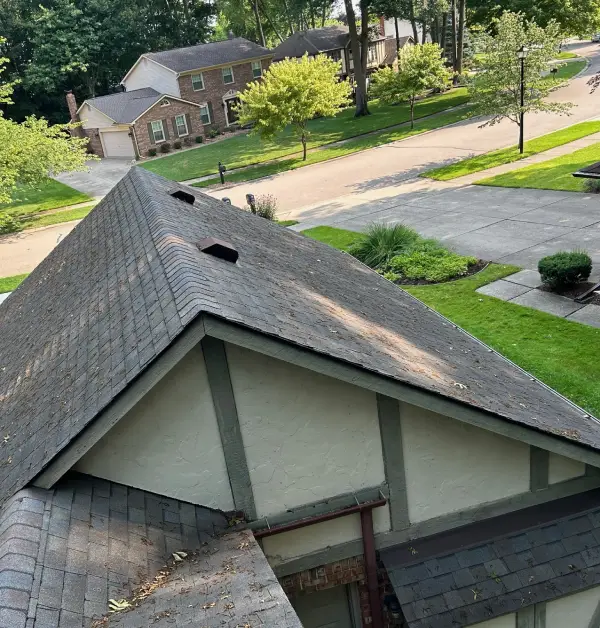
A residential roof is a water-management system.

  • REPAIR
  • MAINTAIN
  • IMPROVE
  • MONITOR
  • REPLACE

We do not sell replacement roofs.

A RESIDENTIAL ROOF

A water-management system.

The visible shingles, metal panels, or membrane are only part of that system. Roof decking, underlayment,
flashing, valleys, penetrations, fasteners, ventilation, gutters, drainage, and transitions all affect how the roof performs.
The purpose of this page is to explain the systems, components, terminology, and common conditions we encounter on residential roofs in West Georgia.

The Roof Guy of Georgia inspects existing roofing systems, diagnoses problems, documents conditions, then recommends one of five practical actions: Repair — Maintain — Improve — Monitor — Replace.

WE DO NOT SELL REPLACEMENT ROOFS.

ROOF INSPECTION & CONSULTATION PRICING

Complimentary digital roof review

If you already have information about the roof, send it to us before scheduling a physical inspection.

Useful information includes:

  • Home inspection reports

  • Contractor estimates

  • Roof photographs

  • Roofing proposals

  • Drone photographs

  • Seller disclosures

  • Photographs of interior water staining

  • Previous repair documentation

We review the information provided, identify roofing items that deserve attention, then explain what can reasonably be determined from the available documentation.

A digital review is limited by the information provided. Photographs or reports cannot always establish the physical condition
of roofing materials, flashing, fasteners, decking, penetrations, or previous repairs.

When physical inspection would provide greater certainty, we will explain why.

The Complimentary Digital Roof Review is intended to determine whether you actually
need a paid inspection before asking you to purchase one.

FOCUSED PHYSICAL EVALUATION

Roof consultation | $135

A Roof Consultation is intended for a specific roofing question or condition.
The $135 service includes:

  • Roof access when conditions permit

  • Physical examination of the identified concern

  • Photographs when useful

  • Professional roofing opinion

  • Explanation of the condition

  • Repair, maintenance, improvement, monitoring, or replacement recommendation

  • Repair estimate when applicable

REAL FIELD CONDITION

There is no separate roof-access charge followed by another charge to explain what we found.

Typical roof consultation requests include:
  • Leak diagnosis
  • Home inspection report follow-up
  • Missing or damaged shingles
  • Lifted shingles
  • Pipe boot deterioration
  • Flashing concerns
  • Chimney leakage
  • Skylight concerns
  • Interior water staining
  • Questionable previous repairs
  • Metal-roof fastener problems
  • Roof-to-wall concerns
  • Second opinions on proposed repairs
  • Second opinions before roof replacement

Sometimes the result is confirmation that a condition does not currently justify repair or replacement.
That is still an answer.

WHOLE-ROOF EVALUATION

Detailed roof inspection

The Detailed Roof Inspection evaluates the roofing system as a whole rather than investigating one isolated concern.
Depending upon the roof type and accessibility, the inspection may include:

OPTIONAL PROFESSIONAL DATA

Additional resources for paying inspection clients

Clients purchasing a Roof Consultation or Detailed Roof Inspection receive information after their service that allows them
to obtain two additional types of professional property data directly from established third-party providers.

Precise aerial roof measurement reports

Professional aerial measurement reports can provide detailed dimensional information without requiring someone to manually measure every roof plane.

Depending upon the report selected, information may include:

These reports can be useful for material calculations, budgeting, comparing roofing proposals, planning future work, or maintaining property records.

The report is ordered directly from the independent provider.

Historical weather reports

Paying clients also receive information allowing them to obtain professional location-specific historical weather data covering the previous two years.

Depending upon available data and report type, information may include recorded:

Historical weather information can be useful when comparing an observed roofing condition with weather events that occurred near the property.

FOR QUALIFYING REAL-ESTATE LISTINGS

Property marketing package for qualifying real-estate listings

Property marketing package at no additional charge

A Detailed Roof Inspection performed for a qualifying real-estate listing also includes a Property Marketing Package at no additional charge.

During the property visit, aerial and exterior photographs can be captured for the listing agent’s use.

Images may be useful for:

AERIAL AND EXTERIOR PHOTOGRAPHS

ROOFING SYSTEM FUNDAMENTALS

The two major categories of roofing systems

Residential roofing can generally be divided into two broad categories:
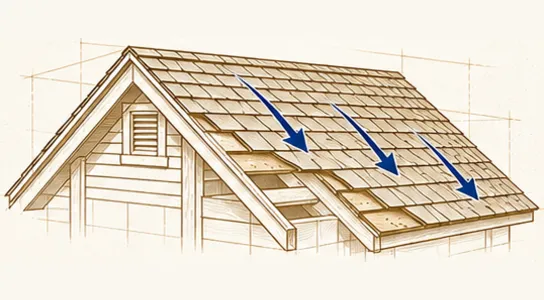
Steep-slope roofing

Steep-slope systems primarily use overlapping
materials, roof pitch, and gravity to shed water.

Common systems include:

  • Asphalt shingles
  • Exposed-fastener metal
  • Standing-seam metal
  • Cedar shingles or shakes
  • Synthetic slate or shake
  • Natural slate
  • Clay tile
  • Concrete tile
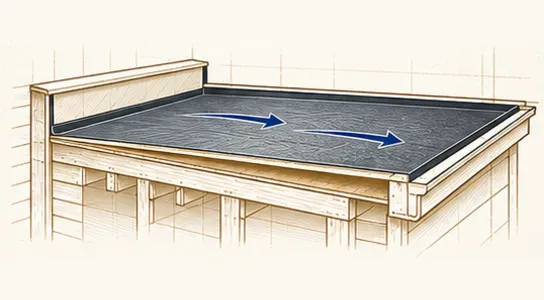
Low-slope roofing

Low-slope systems depend more heavily upon a continuous
waterproof membrane because water moves across
the roof more slowly.

Common systems include:

  • TPO
  • EPDM
  • Modified bitumen
  • Self-adhered membrane systems
  • Built-up roofing
A single house can contain both.

For example, a home may have architectural asphalt shingles over the main structure with modified bitumen or another membrane covering a low-slope porch or addition.

Roof pitch matters because roofing products are designed for specific slope ranges and installation methods.

STEEP-SLOPE ROOFING SYSTEMS

Asphalt shingles
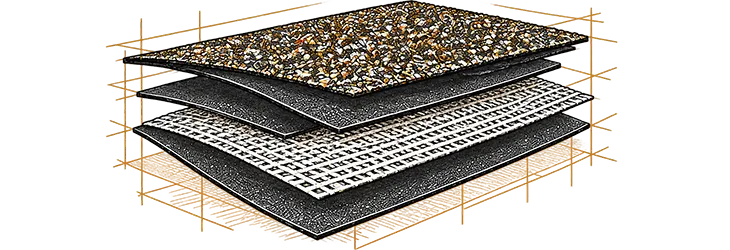
Asphalt shingles are the most common steep-slope residential roofing material encountered throughout West Georgia.

A modern asphalt shingle generally consists of a fiberglass reinforcement mat coated with asphalt, then surfaced with mineral granules.

The granules provide color and protect the asphalt from ultraviolet exposure.

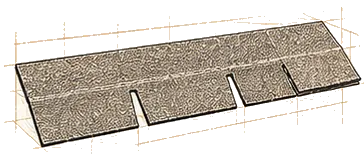
Three-tab shingles

Three-tab shingles have a relatively flat, uniform appearance with slots creating three exposed tabs.
They were widely installed on residential roofs for decades.
Many older homes still have three-tab roofing.

Being three-tab does not by itself mean a roof requires replacement. Actual material condition, fastening, flashing, repairability, and overall performance matter more than the style alone.

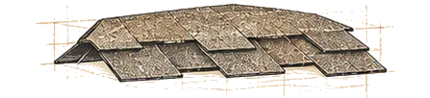
Architectural shingles

Architectural shingles are also called:

  • Dimensional shingles
  • Laminated shingles

They use laminated construction to produce additional thickness and a dimensional appearance.
This is the asphalt-shingle type most commonly encountered on newer residential roofs.

Some manufacturer or product names you might recognize or have heard include:

  • GAF Timberline
  • CertainTeed — Landmark
  • Owens Corning — Duration
  • TAMKO — Heritage
  • Atlas Pinnacle Pristine

Manufacturer identification can be useful when evaluating an existing roof or attempting to match repair material.
The manufacturer’s name alone does not determine whether a roof is good or bad.
Installation quality matters considerably.

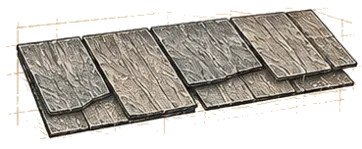
Premium or designer shingles

Premium asphalt products use heavier construction, distinctive patterns, enhanced color combinations, or profiles intended to resemble slate, cedar, or other specialty materials.
Repairs can become more complicated when an older designer product has been discontinued.

Useful identification information includes:

  • Manufacturer
  • Product line
  • Color
  • Exposure
  • Dimensions
  • Approximate installation date

Components of an asphalt shingle roofing system

An asphalt shingle roofing system includes the following components:
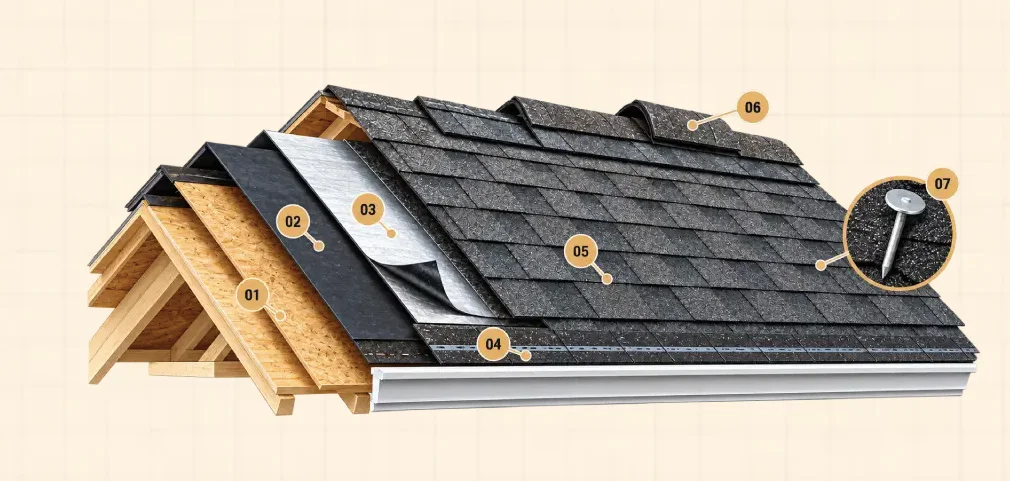
  • 1
    Roof Deck

The roof deck is the structural substrate beneath the roofing system.
Common residential decking:

  • OSB
  • Plywood
  • Wood planks or boards

Common deck conditions:

  • Rot
  • Delamination
  • Soft decking
  • Broken decking
  • Excessive board gaps
  • Water staining
  • Previous leak damage
  • Inadequate fastening

The roof covering can appear reasonably normal while deterioration exists beneath it.

  • Underlayment

Underlayment is installed between the roof deck and primary roofing material.
Types:

  • Asphalt-saturated felt
  • Synthetic underlayment

Underlayment provides secondary protection beneath the finished roof covering.

  • Self-Adhered
    Waterproof Membrane

Also called:

  • Leak barrier
  • Ice and water membrane
  • Peel-and-stick membrane
  • Self-adhered underlayment

May be used at valleys, eaves, skylights, chimneys, penetrations, and roof transitions, depending on roof design, manufacturer instructions, and applicable requirements.

  • Starter Shingles

Starter shingles or starter strips are installed at roof perimeters beneath the first field course.

They help establish correct layout while providing an adhesive seal at vulnerable roof edges.

  • Field Shingles

Field shingles make up the primary visible roof covering.

They are installed in overlapping courses so water is continuously directed toward the lower roof edge.

  • Hip & Ridge Caps

Hips are exterior angled intersections between roof planes.
The ridge is generally the upper horizontal intersection between opposing roof slopes.
Special cap material covers these intersections.

  • Roofing Fasteners

A shingle roof contains thousands of fasteners. Correct placement matters.

Defects:

  • High nails
  • Low nails
  • Angled nails
  • Overdriven nails
  • Underdriven nails
  • Exposed nails
  • Missing fasteners
  • Fasteners that fail to adequately
    engage the roof deck

Improper fastening can contribute to movement, wind damage, lifted shingles, exposed fasteners, and premature failure.

ROOF FLASHING

Water is managed at the details.

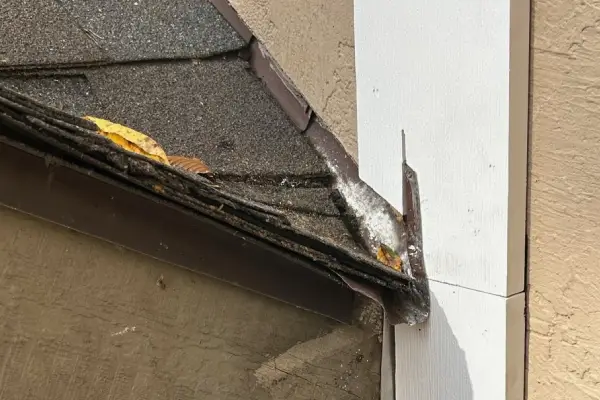
Flashing directs water around interruptions in the roofing system.

Many leaks blamed on ‘the roof’ actually originate at flashing, penetrations, or transitions rather than in the middle of the roofing material.
ROOFING RESOURCES

Roof valleys

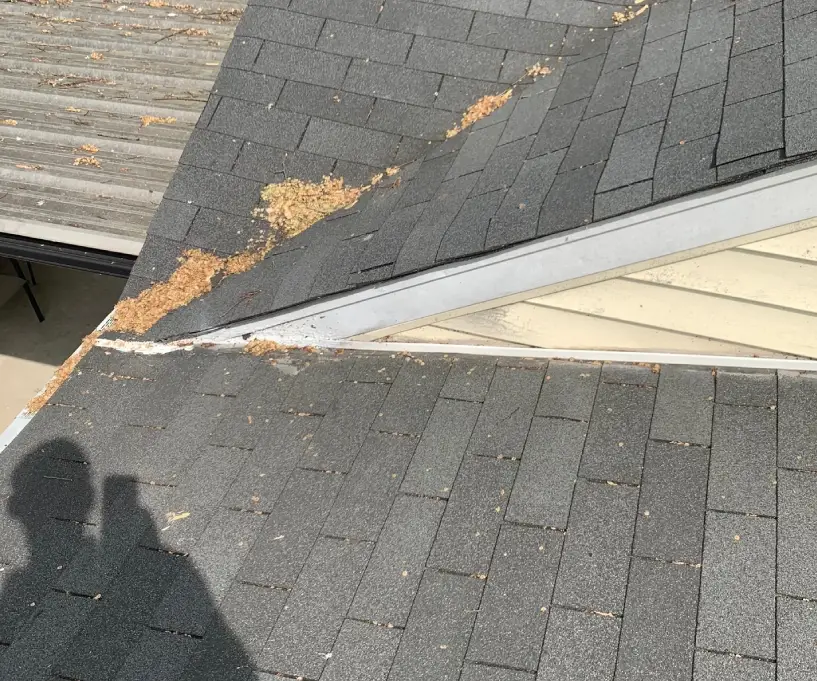
A valley is the interior intersection of two roof planes.
Valleys concentrate runoff from multiple portions of the roof.
Common configurations
  • Open metal valleys
  • Closed-cut valleys
  • Woven valleys
Potential defects
  • Improper shingle cuts
  • Fasteners too close to the valley center
  • Damaged metal
  • Corrosion
  • Improper overlaps
  • Debris accumulation
  • Previous patching
  • Deteriorated roofing material

ROOFING RESOURCES

Plumbing vent pipes & pipe boots

Plumbing vent pipes penetrate the roofing system.
A flashing assembly seals the penetration.
Common pipe boot materials
  • Plastic/Rubber
  • Metal/Rubber
  • Lead
Common failures
  • UV deterioration
  • Age
  • Improper install
  • Exposed fasteners
  • Wildlife
  • Poor prior repairs

Pipe boots are a good example of why a leak does not automatically indicate roof replacement.

ROOFING RESOURCES

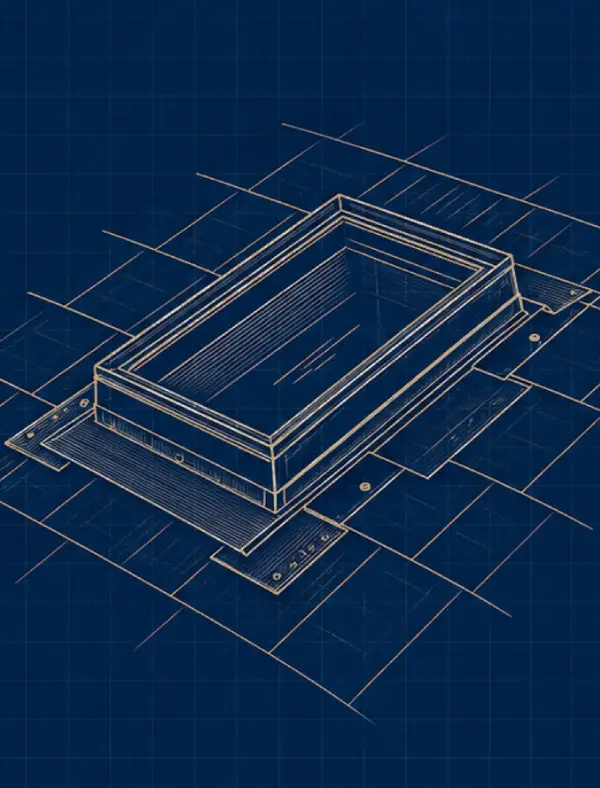
Skylights

A skylight combines several building components:

A skylight combines
  • Roof opening
  • Frame
  • Glazing
  • Underlayment
  • Flashing
  • Interior finishing
  • Operable hardware on venting models
Water may originate from
  • Flashing
  • Surrounding roofing
  • Failed glazing seals
  • Improper installation
  • Condensation
  • Roof drainage above the skylight

ROOFING RESOURCES

Roof ventilation

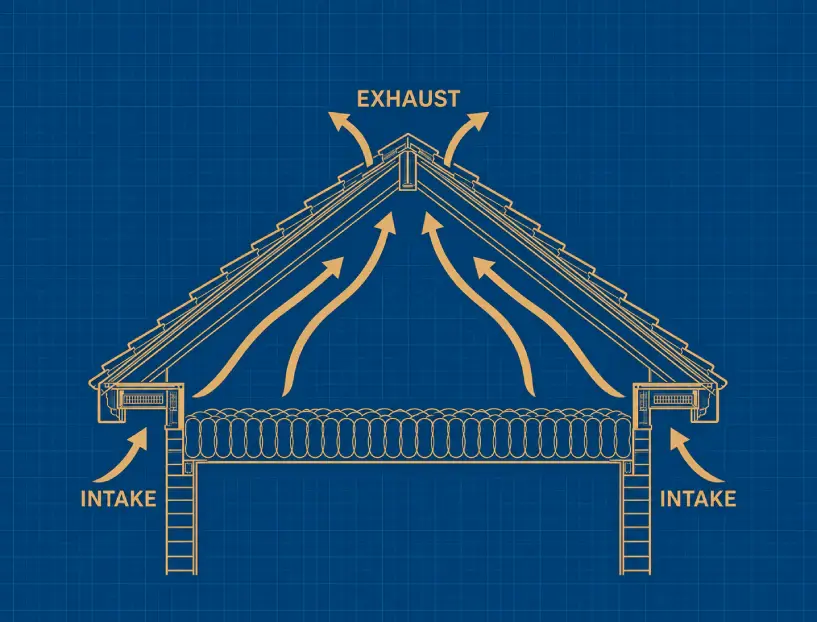
Attic ventilation generally has two functions.

Air enters near the lower portion of the roof, commonly through soffit vents.

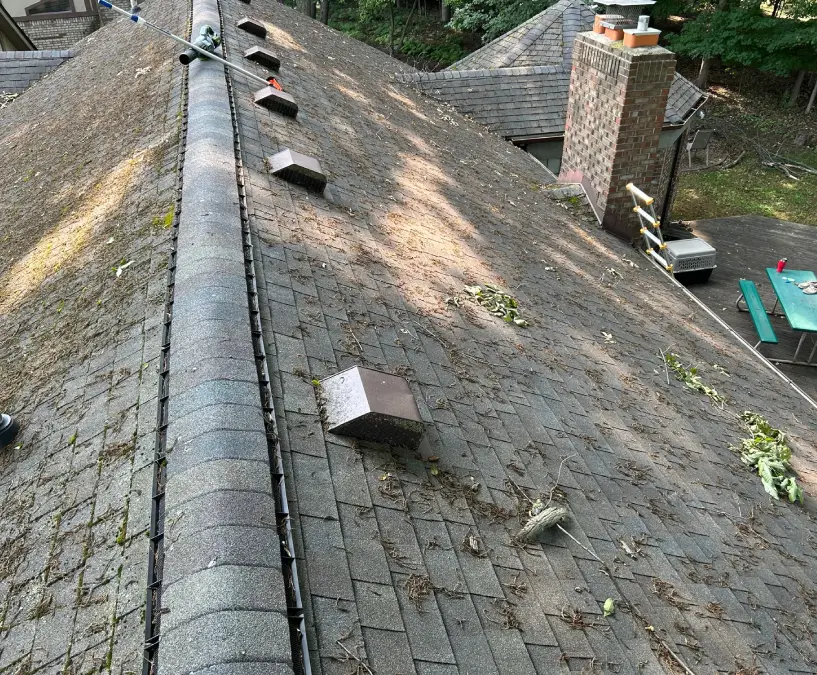
Air exits near the upper portion through components such as:

  • Ridge vents
  • Static box vents
  • Roof louvers
  • Powered attic ventilators
  • Bathroom exhaust
  • Kitchen exhaust
  • Plumbing
  • HVAC equipment
  • Air leakage from conditioned space
  • Rusted roofing nails
  • Damp decking
  • Moisture staining
  • Condensation
  • Deteriorated decking