WHO CAN WE HELP?
The right information for
the decision in front of you
Every roofing problem begins in a different place. Find the situation that best fits yours, then see how The Roof Guy can help.


Home buyers
A repair item on the inspection report does not automatically mean a major roofing project.
During a home purchase, roofing concerns can quickly become negotiation points.
If your home inspector identified missing shingles, flashing concerns, damaged pipe boots, evidence of leakage, or another roofing defect, send us the report. The Roof Guy offers a complimentary digital review of existing home inspection reports. We can review the roofing-related findings, photographs, and comments before determining whether the condition appears repairable or whether an onsite evaluation is needed.
If repair work is appropriate, we can explain what needs to be corrected and why.
This gives you better information before deciding how the issue should be handled during the transaction.

Home sellers
Fix the right things before they become closing problems.
A buyer’s inspection can uncover roofing items that were not previously obvious.
Some may be simple maintenance issues.
Some may require localized repairs.
Some may need further evaluation before anyone knows what the appropriate solution is.
The Roof Guy can evaluate the reported concern, document the condition, then determine what reasonably needs to be corrected.
If you already have the buyer’s home inspection report, send it to us for a complimentary digital review before scheduling work.
The objective is not to perform unnecessary repairs.
It is to resolve legitimate roofing concerns clearly before they become larger transaction problems.

Real estate professionals
Give your client somewhere to send the roofing question.
Roofing repair items can create uncertainty during a transaction.
A home inspector may identify a defect, but your client still needs to know what the roofing condition actually requires.
You do not need to interpret the defect yourself.
Forward the inspection report to The Roof Guy for a complimentary digital review, or refer your client directly for an onsite repair evaluation.
We can evaluate the roofing concern, document relevant conditions, explain whether repair appears practical, then outline the appropriate next step.
That gives your client a roofing-specific answer without turning every inspection item into a replacement conversation.

Home inspectors
You identified the concern. We can take the roofing evaluation from there.
Home inspectors frequently identify roofing defects that warrant further evaluation by a roofing professional.
That may include:
Your client can forward the inspection report directly to The Roof Guy for a complimentary digital review.
We review the roofing observations already documented, then determine whether the condition can be evaluated from the existing information or whether an onsite visit is appropriate.
You do not need to take the roofing diagnosis beyond the scope of your inspection.
We provide the roofing-specific next step.

Insurance professionals
A practical roofing resource for your policyholders.
Policyholders often call their insurance agent first when they notice a roof problem.
Sometimes it is a leak.
Sometimes they see missing shingles.
Sometimes they are concerned after a storm.
Sometimes they simply do not know whether the condition is serious.
The Roof Guy gives you a roofing resource to refer them to.
We evaluate the condition, determine whether a localized repair appears appropriate, document what we find, then explain the available options.
Our role is evaluating the roofing condition and recommending appropriate roofing work.
Coverage decisions remain between the policyholder and their insurance carrier.

Property investors
Repair what needs repair. Plan for everything else.
Roof problems can quickly disrupt the economics of a rental property or acquisition.
The Roof Guy can evaluate specific roofing concerns, determine whether localized repair is practical, document deferred maintenance, and identify conditions that may require future planning.
That can be useful for:
LEAK SOURCE EDUCATION
Roofs generally leak in three places.
Most roof leaks occur around areas where the otherwise continuous roof surface is interrupted.
Roof-to-wall connections
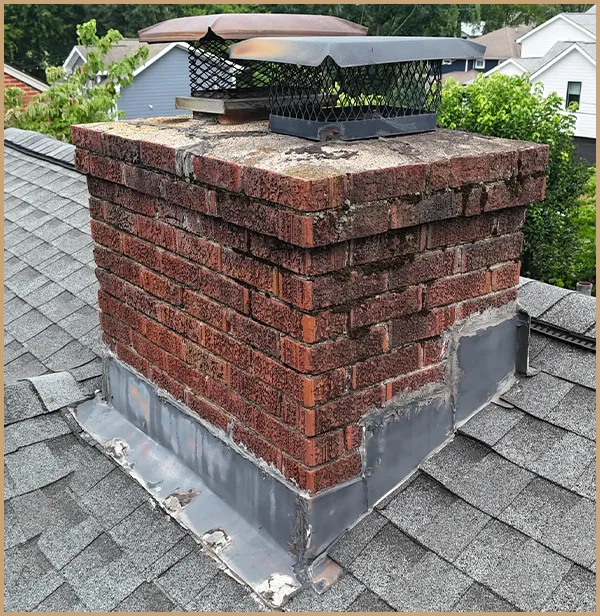
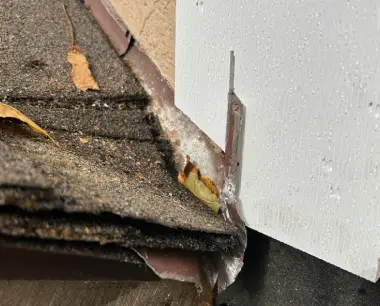
These occur where the roof meets a wall, chimney, dormer, or another part of the structure. These transitions depend heavily on proper flashing. A relatively small flashing failure can allow water behind the roofing system.
Penetrations
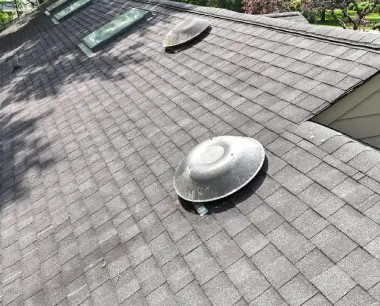
Anywhere something passes through the roof creates another potential point of failure.
These areas require properly installed flashing, boots, seals, or related components.
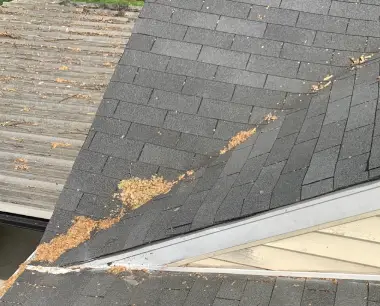
Valleys
Valleys occur where two roof slopes meet. They concentrate water into a common drainage path, which makes proper installation especially important.
The shingles across the broad middle of a roof are often the simplest part.
The details are where roofing becomes complicated.
That is why finding the actual source matters.
HAVE A LEAK?
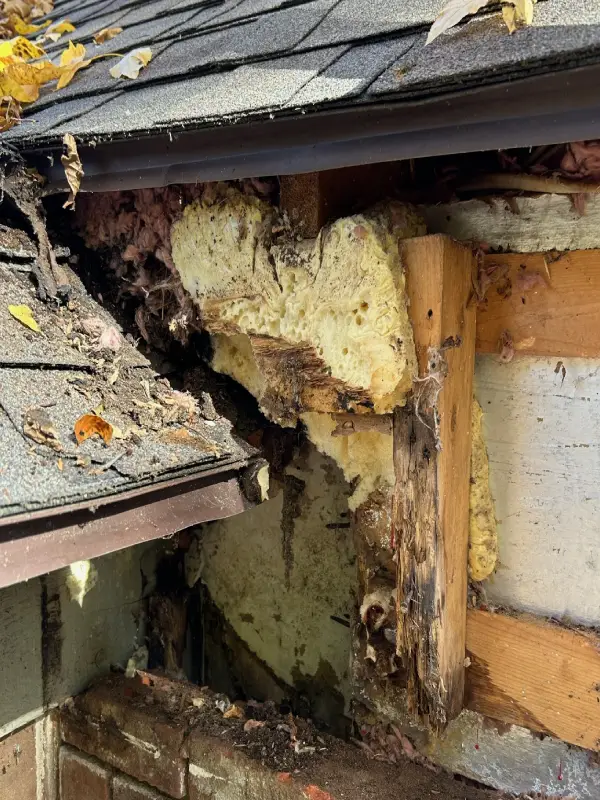
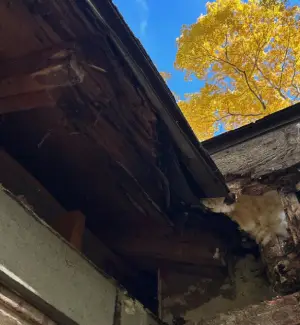
Where you see water is not necessarily where it entered.
Water can travel. It may move along roof decking, framing, pipes, fasteners, insulation, or other building components before becoming visible inside the home.
That means a ceiling stain may be several feet away from the actual roof failure.
Applying sealant near the visible symptom can sometimes hide the problem temporarily without correcting the source.
The objective is to identify the likely source before deciding how it should be repaired.
Flashing, pipe boots, and roof penetrations
Some of the most important parts of a roofing system are the details homeowners rarely see.
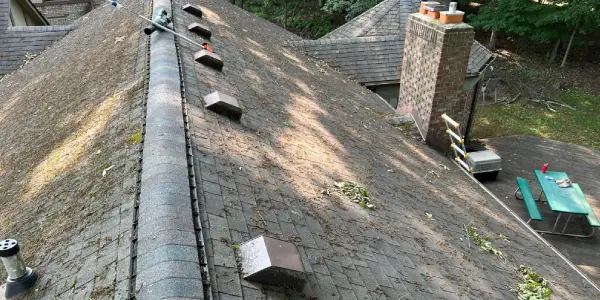



We commonly evaluate:

Pipe boots

Step flashing

Wall flashing

Counterflashing

Chimney flashing

Skylight flashing

Roof vents

Roof penetrations
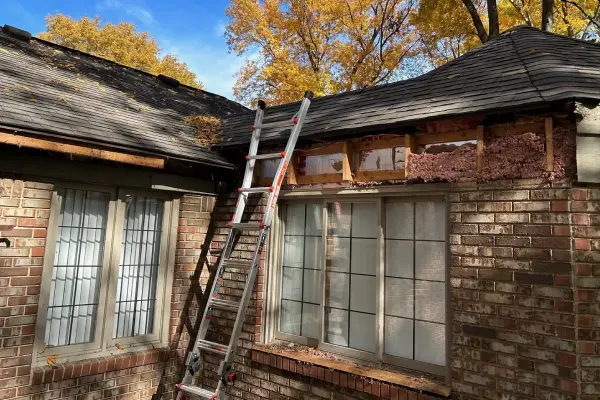
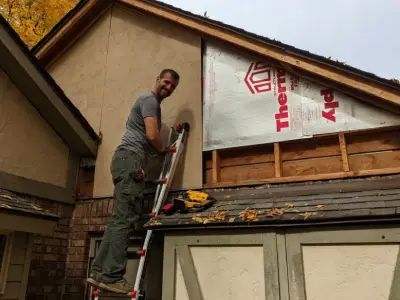
The size of the leak does not necessarily tell you the size of the repair.
DIAGNOSIS MATTERS.
Aerial documentation when it helps
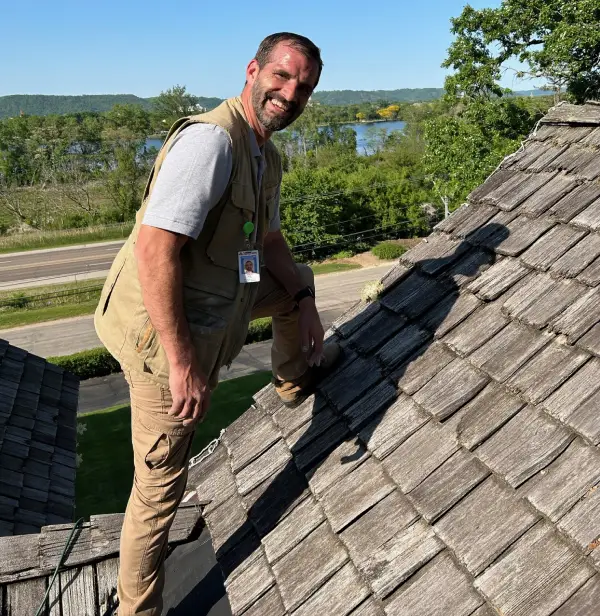
Andrew Buss holds an FAA Part 107 Remote Pilot Certificate for commercial drone operations.
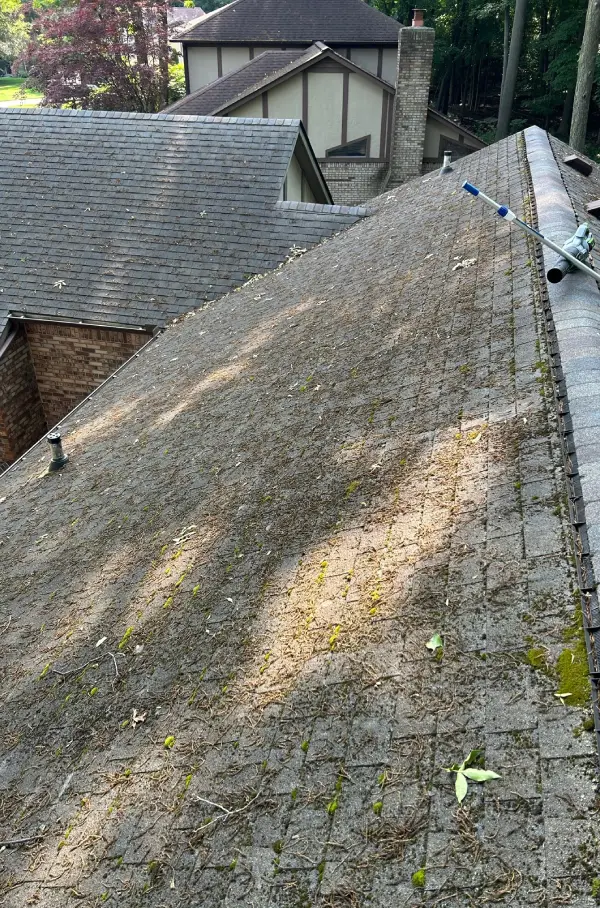
Drone imagery can be useful when evaluating roof areas that are difficult to view from the ground or when broader aerial context helps explain a repair condition.
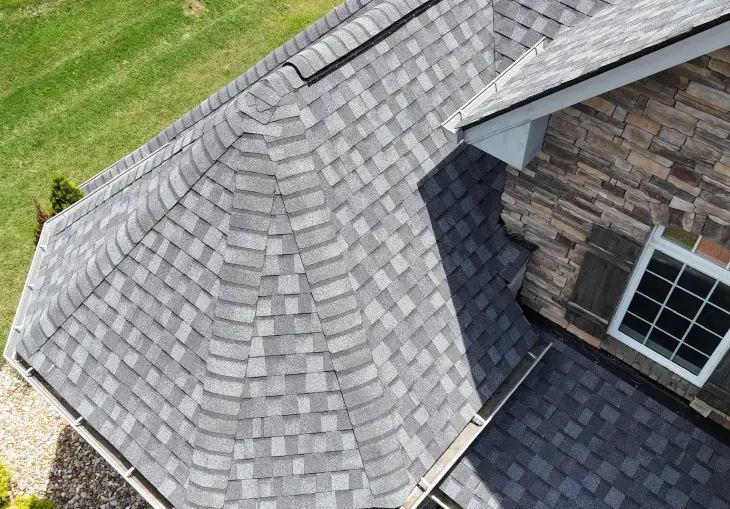
We may use aerial photography to document:
Roof slopes

Skylights

Storm-related concerns

Valleys
Roof-to-wall transitions
Difficult-to-access roof sections
Chimneys

Penetrations
The relationship between a localized repair area and the surrounding roof
The drone is another diagnostic and documentation tool.
It does not replace direct observation when direct access is appropriate.
Already have a home inspection report?
If a home inspector has already identified a roofing concern, you may not need to start from the beginning.
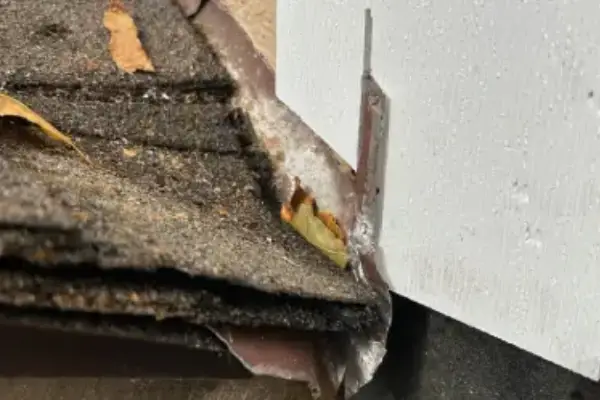
That recommendation does not automatically mean the roof needs replacement.
It means the roofing condition needs additional evaluation.
Repair first — when repair makes sense.
There are two mistakes we want to avoid.

The first is repeatedly repairing a roof that has reached the point where continued repair no longer makes practical sense.
The second is replacing a serviceable roof because of one localized problem.

Sometimes the answer is repair.

Sometimes maintenance is enough.

Sometimes a corrective improvement makes more sense.
Sometimes the roof has reached the point where replacement is the responsible recommendation.
Small problem? Get it checked
Roof problems rarely become less expensive when ignored.
A missing shingle, water stain, loose flashing, deteriorated pipe boot, or unusual roof condition may be relatively minor today.
Finding the cause early usually gives you more options.