
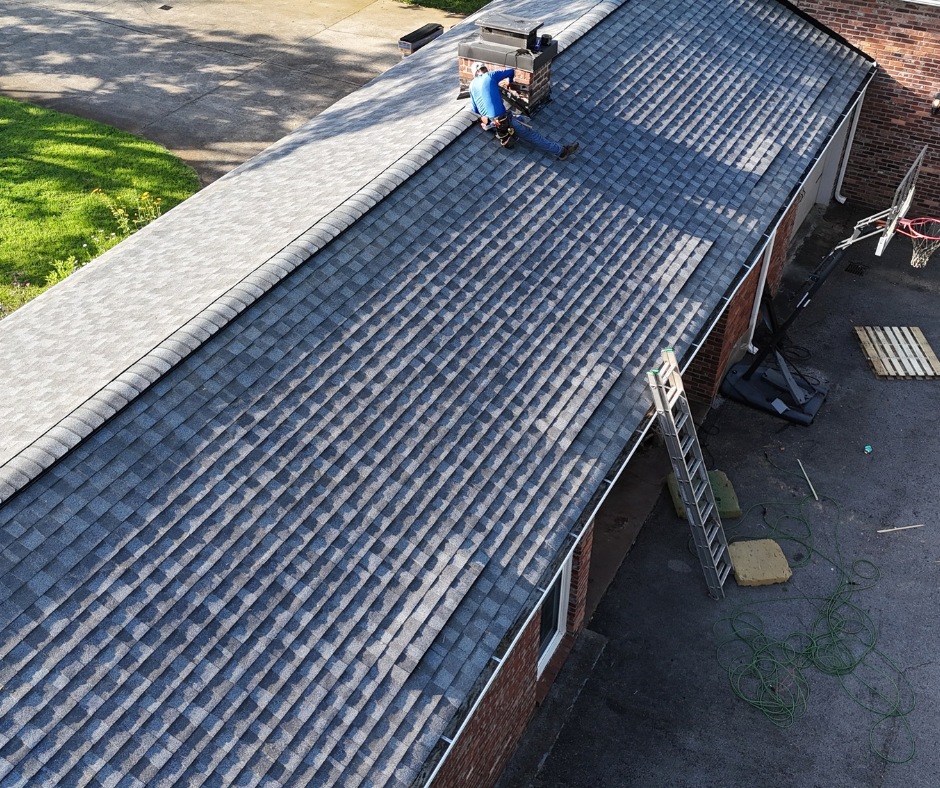
August is one of the hottest months in West Georgia. While homeowners rely on air conditioning to keep their living spaces comfortable, temperatures inside their attics can climb significantly higher than outdoor temperatures.
What many homeowners don’t realize is that roof ventilation plays an important role in managing attic heat, moisture, plus the long-term performance of their roofing systems.
How Roof Ventilation Works
A properly designed attic ventilation system relies on two primary components:
- Intake ventilation: Typically located near the eaves or soffits, allowing outside air to enter the attic.
- Exhaust ventilation: Typically located near the roof’s highest points, allowing warmer attic air to escape.
The objective is to establish consistent airflow through the attic space.
Common Types of Roof Vents
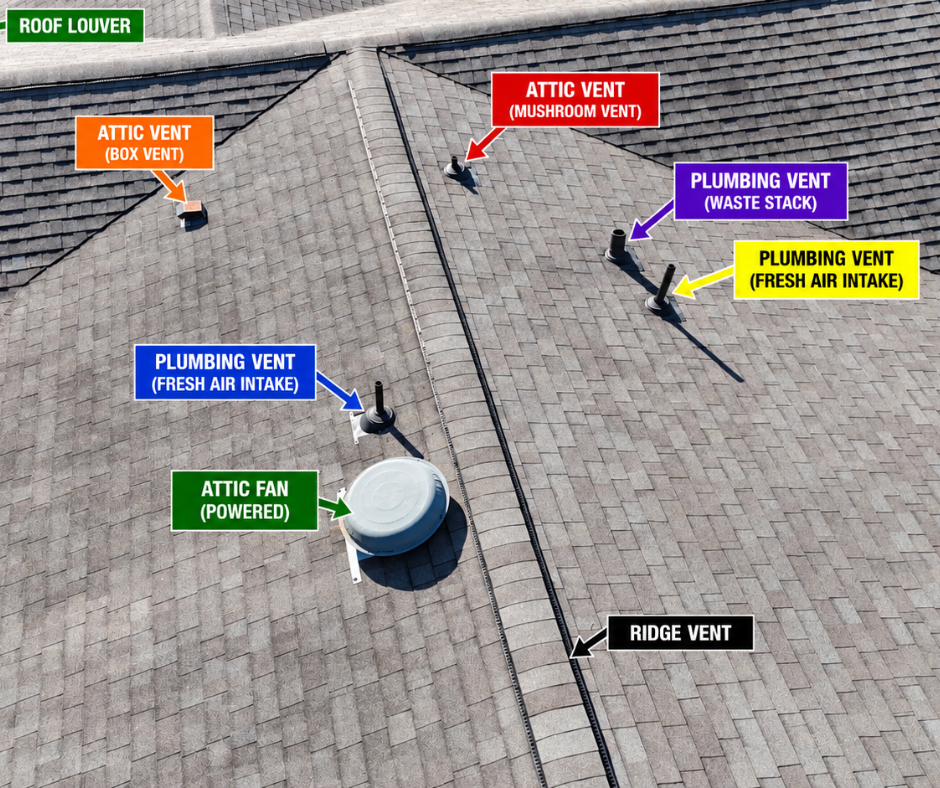
Not every roof uses the same ventilation system. Several common components include:
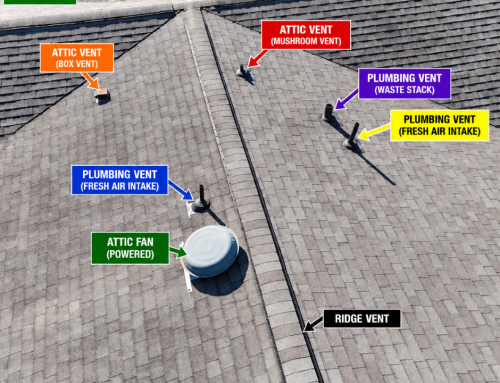
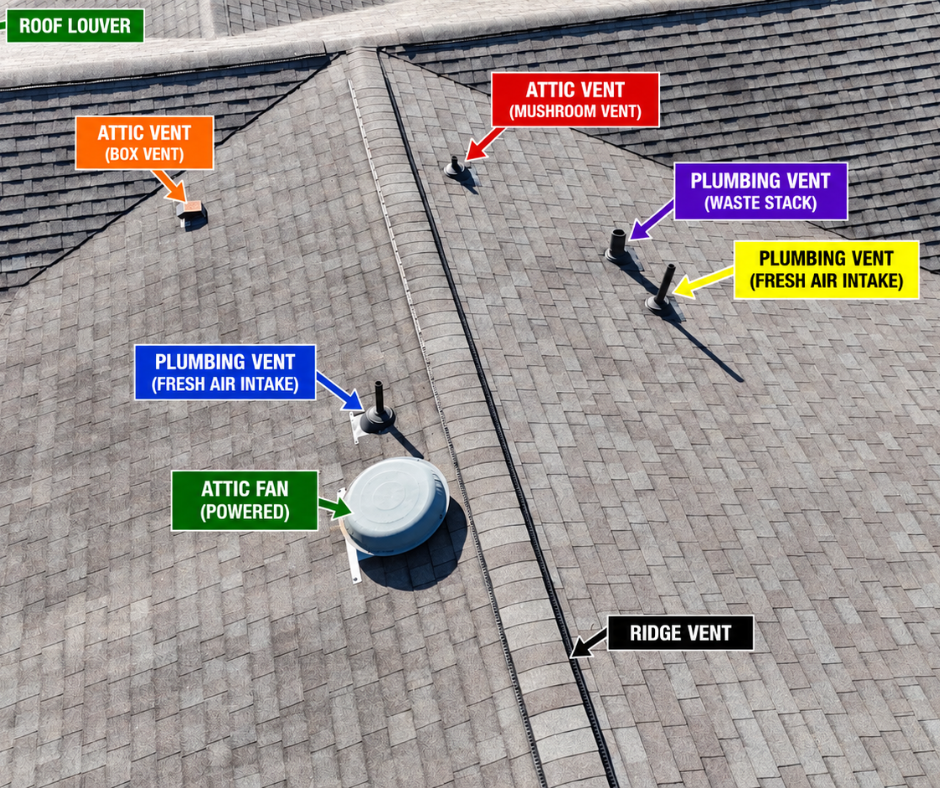
Ridge Vents: Installed along the roof’s ridge to provide continuous exhaust ventilation.
Box Vents: Individual stationary vents installed near the upper portions of roof slopes.
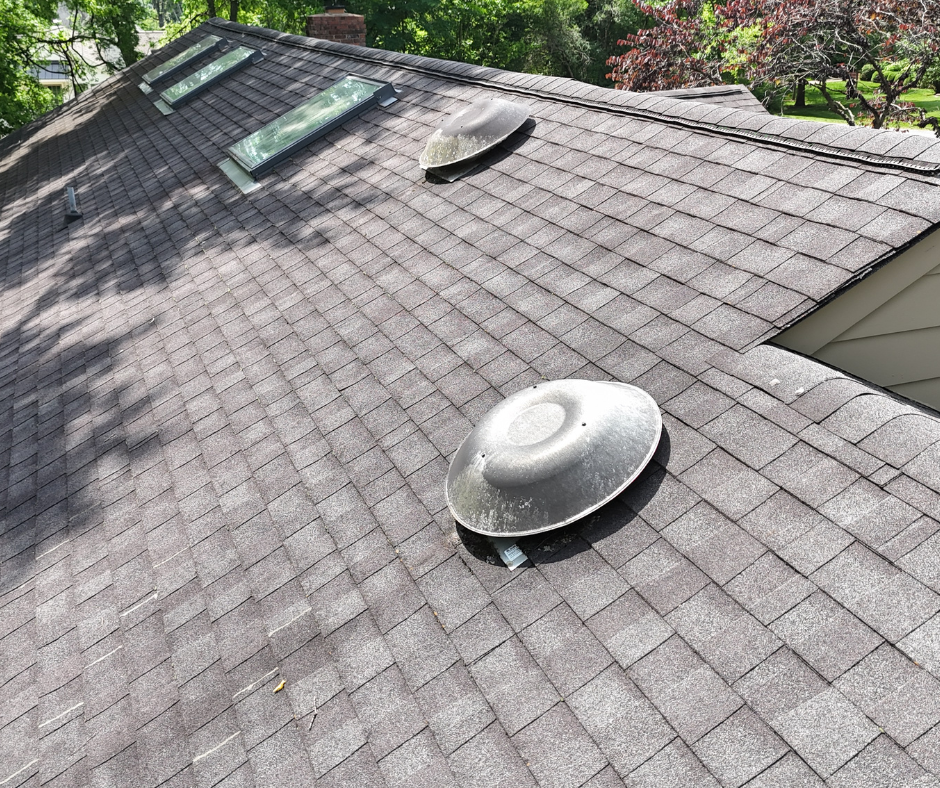
Powered Attic Fans: Electrically powered or solar-powered fans designed to mechanically exhaust attic air.
Soffit Vents: Openings beneath roof overhangs that commonly provide intake ventilation.
Each system has specific installation requirements. Combining different exhaust ventilation methods without proper design can create unintended airflow patterns.
More Ventilation Isn’t Always Better
One common misconception is that adding more roof vents automatically improves attic ventilation.
In reality, ventilation performance depends on the amount of available intake, exhaust capacity, attic configuration, plus unobstructed airflow.
For example, installing additional exhaust vents without sufficient intake can create pressure differences that draw conditioned air from the living space into the attic.
Similarly, powered attic fans may increase energy consumption without delivering meaningful improvements when the overall system is poorly designed.
Ventilation Is Only Part of the Equation
Attic ventilation works alongside insulation plus air sealing.
Insulation helps reduce heat transfer between the attic space plus the living areas below.
Air sealing helps prevent conditioned indoor air from escaping into the attic.
A properly ventilated attic can still contribute to uncomfortable indoor temperatures when insulation or air sealing is inadequate.
What Homeowners Should Understand
Excessive attic heat does not automatically indicate a ventilation problem.
Roof color, outdoor temperature, attic construction, insulation, plus ventilation design all influence attic conditions.
Before adding vents or installing powered equipment, homeowners benefit from understanding how their existing system operates.
The goal isn’t simply to move more air. It’s to establish the appropriate airflow for the roofing system.
Understanding these differences helps homeowners make informed decisions about maintenance, improvements, plus unnecessary expenses.
The Roof Guy of Georgia
Roofing Without the Pressure.
Inspect. Repair. Maintain. Improve.


Leave A Comment