When homeowners think about roof maintenance, they usually focus on shingles, flashing, gutters, or visible signs of damage.
But one of the most important parts of a roofing system is often hidden from view.
Your attic plays a significant role in how your roof performs throughout the year. Temperature, moisture, insulation, plus airflow all influence conditions beneath the roof covering.
For homeowners throughout Carrollton, Villa Rica, Bowdon, plus surrounding West Georgia communities, understanding attic ventilation can help identify opportunities to improve roofing performance while protecting existing building materials.
At The Roof Guy of Georgia, we believe a roof should be evaluated as a complete system, not simply a collection of shingles.
What Is Attic Ventilation?
Attic ventilation is the controlled movement of outside air through designated openings in an attic space.
In many residential roofing systems, ventilation uses two primary components.
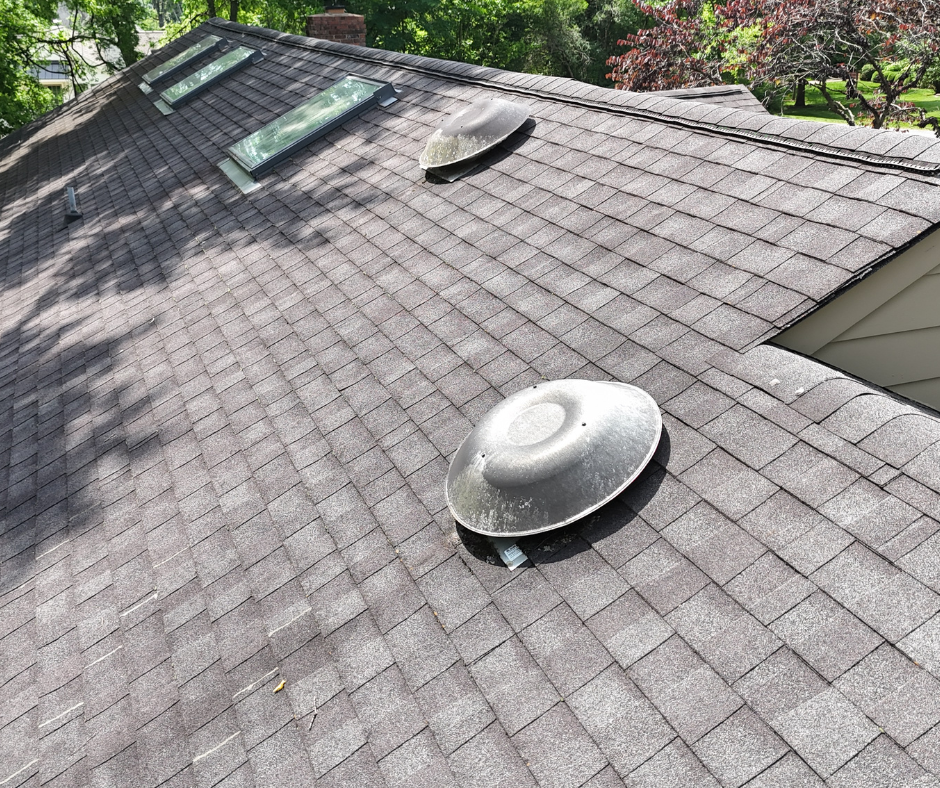
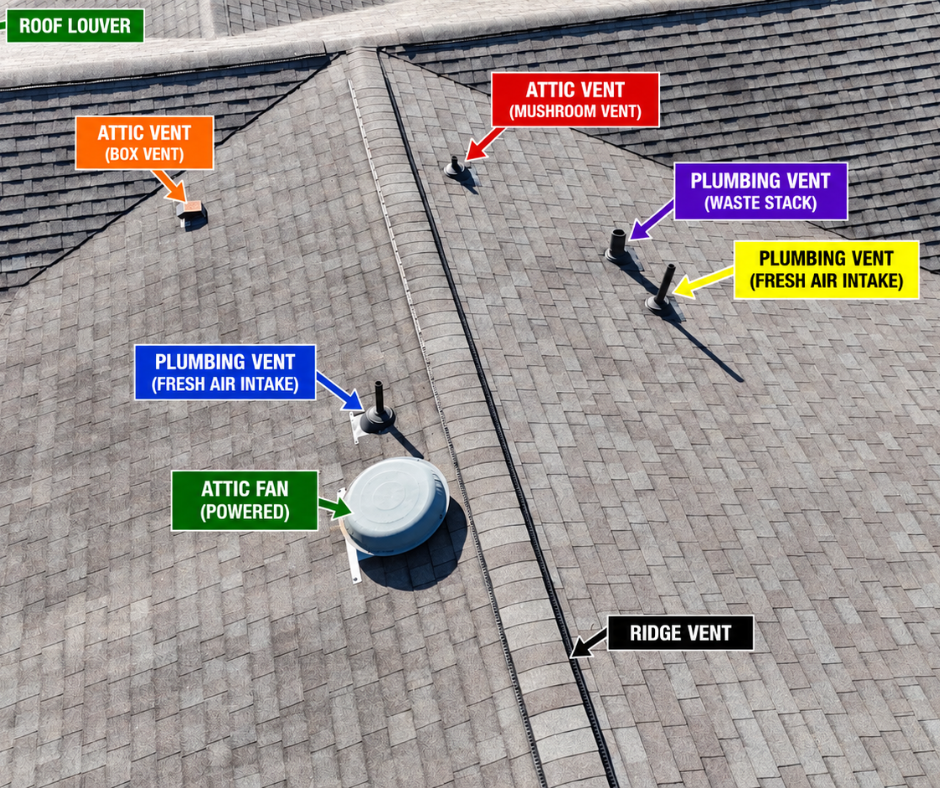
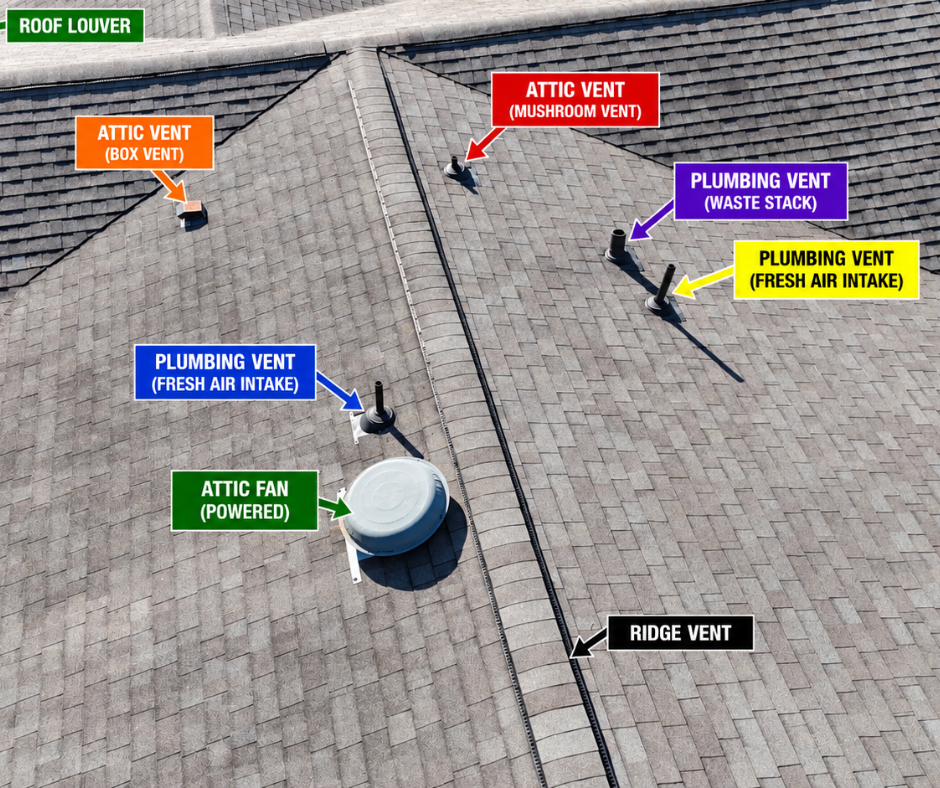
Intake Ventilation: Openings located near the lower portion of the roof, commonly in soffits, allow outside air to enter the attic.
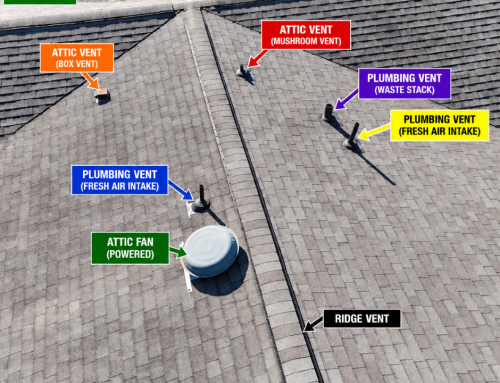
Exhaust Ventilation: Openings near the upper portion of the roof, such as ridge vents, allow warmer attic air to escape.
When properly designed, these components work together to encourage airflow through the attic.
Wind plus temperature differences help drive this movement.
However, the appropriate ventilation arrangement depends on the building’s design. Some homes use different systems, including conditioned or unvented attic assemblies.
Understanding the existing configuration is essential before making changes.
Why Attic Ventilation Matters in Georgia
West Georgia experiences hot summers, humid conditions, frequent rainfall, plus seasonal temperature changes.
These conditions influence the temperature plus moisture levels within attic spaces.
During summer, solar energy heats roofing materials. Some of that heat transfers through the roof assembly into the attic.
During cooler weather, moisture carried by indoor air can enter attic spaces through ceiling openings or improperly sealed penetrations.
Proper ventilation can help moderate attic conditions in appropriately designed vented assemblies.
However, ventilation alone cannot correct every temperature or moisture problem.
Insulation, air sealing, ductwork, plus indoor humidity also play important roles.
How Summer Heat Affects Your Attic
On a hot Georgia afternoon, roof surfaces can become substantially warmer than the surrounding outdoor air.
That heat transfers into the roof decking, then into the attic.
Depending on roof construction, ventilation, insulation, plus sun exposure, attic temperatures can become extremely high.
Excessive heat may affect comfort in adjacent living spaces, particularly when insulation or ceiling air sealing is inadequate.
Ductwork located in hot attic spaces may also experience additional heat gain.
Ventilation can help remove some accumulated heat, but homeowners should not expect ventilation improvements alone to solve every cooling problem.
A professional evaluation considers the complete attic assembly before identifying appropriate improvements.
Moisture Can Be a Bigger Concern Than Heat
While attic temperatures receive considerable attention, moisture management is equally important.
Warm, humid air from living spaces can enter attics through openings around recessed lighting, plumbing penetrations, attic access doors, plus other ceiling gaps.
Bathroom exhaust fans or dryer ducts improperly terminated inside an attic can introduce additional moisture.
When moist air contacts surfaces below its dew point, condensation may develop.
Persistent moisture can contribute to:
- Staining on roof decking
- Deterioration of wood components
- Damp insulation
- Corrosion of metal fasteners
- Microbial growth
- Reduced insulation performance
Ventilation may help remove moisture under suitable conditions, but uncontrolled moisture sources should be identified rather than simply adding more vents.
The Importance of Balanced Intake Plus Exhaust
One of the most common misconceptions about attic ventilation is that more vents automatically mean better performance.
In reality, the location plus relationship between intake or exhaust openings matter.
For many conventional vented attics, air enters near the eaves, travels through the attic, then exits near the ridge.
If intake openings are insufficient or blocked, upper exhaust vents may not perform as intended.
Likewise, installing incompatible exhaust systems can create unintended airflow patterns.
For example, combining certain powered attic fans with passive ridge ventilation may cause air to enter through nearby exhaust openings rather than lower intake vents.
This can reduce the effectiveness of the intended ventilation pathway.
Ventilation improvements should follow applicable building requirements plus manufacturer guidance.
Common Attic Ventilation Problems
A professional attic evaluation may identify several conditions affecting airflow.
Blocked Soffit Vents
Insulation can sometimes cover soffit ventilation openings, particularly near the attic perimeter.
When intake openings become obstructed, outside air may not enter as intended.
Properly installed ventilation baffles can help maintain airflow pathways where appropriate.
Insufficient Intake Ventilation
Some homes have upper exhaust vents but inadequate lower intake openings.
This imbalance can limit the effectiveness of the ventilation system.
Damaged Ridge Vents
Ridge ventilation components may become damaged, displaced, or obstructed.
A professional inspection can evaluate their visible condition.
Improperly Terminated Exhaust Ducts
Bathroom exhaust fans, kitchen exhaust systems, plus clothes dryers should discharge to appropriate exterior locations according to applicable requirements.
Terminating these systems inside an attic can introduce moisture or other contaminants.
Incompatible Ventilation Components
Certain combinations of powered fans, gable vents, ridge vents, plus other exhaust openings can interfere with intended airflow.
The system should be evaluated as a whole before adding or modifying components.
Does Attic Ventilation Extend Roof Life?
Proper ventilation can support roofing system performance by helping manage attic heat plus moisture.
However, its effect on roof service life varies.
Roofing material type, installation quality, insulation, sun exposure, maintenance history, plus local weather conditions all influence long-term performance.
Some roofing manufacturers specify ventilation requirements as part of their installation instructions.
Failing to follow those requirements may affect roofing performance or applicable warranty provisions.
The objective is not to promise a specific number of additional years.
It is to maintain conditions consistent with the roofing system’s intended design.
Can Better Ventilation Lower Energy Bills?
Potentially, but results vary considerably.
In some homes, improving attic ventilation may reduce heat accumulation.
However, insulation, air leakage, ductwork location, plus HVAC performance often have a greater influence on household energy consumption.
Adding vents without evaluating these factors may produce little measurable improvement.
For this reason, homeowners should be cautious of claims promising dramatic reductions in cooling costs from ventilation modifications alone.
A practical evaluation identifies the actual conditions before proposing improvements.
Why Fall Is a Useful Time to Evaluate Attic Ventilation
October brings cooler temperatures to West Georgia, making it a practical time to evaluate attic conditions after the summer heat.
Homeowners may have noticed unusually hot upstairs rooms, persistent attic odors, or other comfort concerns during warmer months.
Fall also provides an opportunity to inspect ventilation openings before winter temperature changes.
A professional evaluation may identify blocked intake vents, damaged exhaust components, moisture staining, or improperly terminated ducts.
Addressing appropriate concerns can help the attic system function as intended throughout the year.
What Does a Professional Ventilation Evaluation Include?
An attic ventilation evaluation should consider more than the number of visible roof vents.
Depending on accessibility, a professional assessment may examine:
- Existing intake ventilation
- Existing exhaust ventilation
- Visible obstructions
- Ventilation component condition
- Roof configuration
- Attic insulation placement
- Evidence of moisture accumulation
- Exhaust duct termination locations
- Signs of previous ventilation modifications
Ventilation calculations may also be appropriate when evaluating proposed changes.
The findings should help homeowners understand whether their existing system has identifiable deficiencies.
Why Adding More Vents Isn’t Always the Answer
A homeowner experiencing excessive attic heat may assume that installing additional roof vents is the obvious solution.
However, additional openings can sometimes create new problems.
Improperly located vents may disrupt intended airflow, introduce weather vulnerabilities, or interfere with existing components.
In some cases, correcting blocked intake openings may be more appropriate than adding exhaust ventilation.
In others, improving attic air sealing or insulation may address the underlying concern more effectively.
The right improvement begins with identifying the actual problem.
The Roof Guy Approach to Attic Ventilation
At The Roof Guy of Georgia, our services focus on four core principles.
Inspect: Evaluate accessible roofing components, attic ventilation conditions, plus visible moisture concerns.
Repair: Address localized roofing deficiencies involving ventilation components, flashing, or roof penetrations.
Maintain: Help preserve roofing systems through routine inspections, cleaning, plus preventative care.
Improve: Identify appropriate opportunities to enhance ventilation, drainage, plus overall roofing performance.
Our focus is helping homeowners understand how their roofing systems function before making decisions about improvements.
A Healthy Roof Starts Below the Shingles
Your attic is an important part of your home’s roofing system.
Proper ventilation, insulation, air sealing, plus moisture management work together to support building performance.
Understanding these relationships can help homeowners identify legitimate concerns without making unnecessary modifications.
For homeowners throughout Carrollton, Villa Rica, Bowdon, plus surrounding West Georgia communities, The Roof Guy of Georgia provides professional roof inspections, ventilation evaluations, targeted repairs, maintenance, plus roofing improvements.
The Roof Guy of Georgia
Roofing Without the Pressure.

Leave A Comment